Entree: Mexico – San Luis Potosi, Bajio Mexico – Cabrito al Pastor
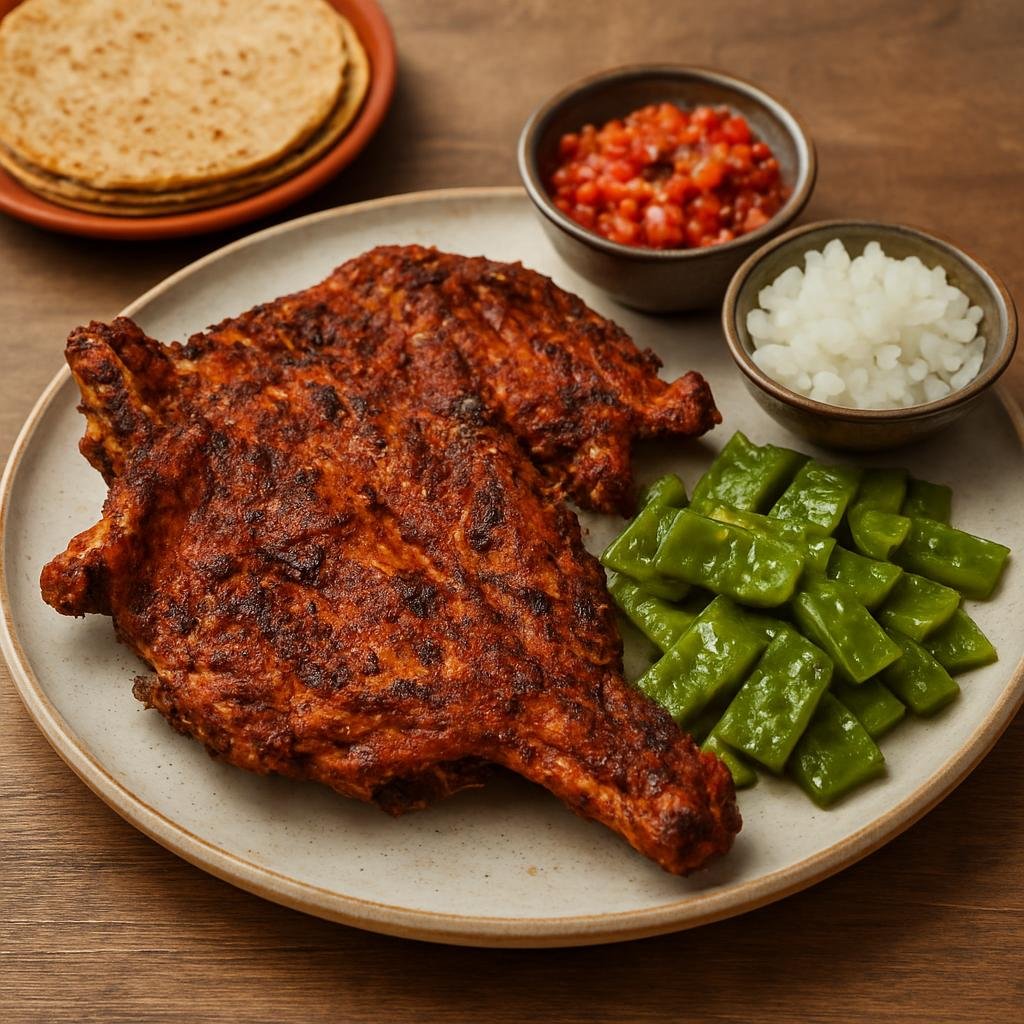
Serving Size: 6
Approximate Time
Prep
1 hr
Cook
3 hrs 20 min
Additional
45 min
Total
4 hrs 30 min
Ingredients
- 1 whole kid goat (cabrito), butterflied or halved, approx. 6–8 lb (2.7–3.6 kg)
- 3 tbsp (45 g) achiote (annatto) paste
- 3 dried guajillo chiles, stems and seeds removed
- 2 dried ancho chiles, stems and seeds removed
- 1 cup (240 ml) hot water (for rehydrating chiles)
- 1 cup (240 ml) fresh orange juice
- 1/2 cup (120 ml) pineapple juice
- 1/2 cup (120 ml) white vinegar
- 6 garlic cloves, approx. 1.5 oz (45 g)
- 2 tbsp (30 ml) vegetable oil (plus extra for basting) or rendered lard
- 2 tbsp (12 g) dried Mexican oregano
- 1 tsp (2 g) ground cumin
- 4 sprigs fresh thyme (leaves removed and chopped) or 2 tbsp (8 g) fresh thyme leaves
- 3 bay leaves
- 2 tbsp (30 g) kosher salt (adjust to taste)
- 1 tbsp (15 g) freshly ground black pepper
- 1/2 cup (120 ml) reserved marinade or additional oil for basting
- 18–24 corn tortillas (as needed), approx. 12–18 oz (340–510 g) total
- Lime wedges for serving
- Queso fresco, crumbled, 6 oz (170 g) (optional)

For charred tomato-serrano salsa (Salsa Asada)
- 1 lb (450 g) tomatoes (Roma or vine), about 4 medium
- 2 serrano chiles (or to taste)
- 1/2 medium white onion, approx. 3 oz (85 g)
- 1/2 cup (15 g) cilantro leaves
- 1 tsp (5 g) kosher salt
- Juice of 1 lime, approx. 2 tbsp (30 ml)

For chopped onion garnish (Cebolla con Limón)
- 1/2 small red onion, thinly sliced, approx. 3 oz (85 g)
- Juice of 1 lime, approx. 2 tbsp (30 ml)
- Pinch of salt

For grilled nopales
- 1 lb (450 g) cleaned nopales paddles, sliced into strips
- 1 tbsp (15 ml) vegetable oil
- Salt and a pinch of Mexican oregano to finish
Instructions
Short Description:
Tender cabrito (young goat) marinated in an achiote- and chile-forward adobo with local herbs, then slow-roasted until falling-apart tender and finished hot to crisp the exterior. Served with warm corn tortillas, a charred tomato-serrano salsa, grilled nopales, and limey chopped onion for a complete Bajio main course.

Regional Notes:
This San Luis Potosi (Bajio) version uses a herb-forward achiote adobo with Mexican oregano, thyme, and bay — then slow-roasts the butterflied kid rather than the vertical trompo used for pork al pastor. The result emphasizes slow-roasted goat flavor and local accompaniments (nopales, fresh tortillas) typical to the region.

1. Prepare chiles: remove stems and seeds from guajillo and ancho chiles. Soak chiles in 1 cup (240 ml) hot water for 15–20 minutes until pliable; reserve soaking liquid.
2. Make adobo: in a blender, combine rehydrated chiles (including about 1/4 cup/60 ml of the soaking liquid), achiote paste, orange juice, pineapple juice, white vinegar, garlic, vegetable oil, Mexican oregano, ground cumin, chopped thyme leaves, bay leaves, kosher salt, and black pepper. Blend to a smooth paste, adding up to 2–3 tbsp (30–45 ml) additional orange juice or soaking liquid if needed for a thick, spreadable marinade. Taste and adjust salt.
3. Prep the cabrito: pat the butterflied goat dry with paper towels. Score thicker areas of meat lightly. Place on a tray and rub the adobo all over, getting it into cuts and cavities; reserve about 1/2 cup (120 ml) of the marinade for basting. Cover and refrigerate 8–12 hours, turning once halfway through so flavors penetrate evenly.
4. Preheat and set roasting method: preheat oven to 275°F (135°C). If using a charcoal spit/pit, bank coals for low, indirect heat around 250–300°F (120–150°C). Place the cabrito skin/outer side up on a rack set in a large roasting pan (or on the spit rack).
5. Slow-roast: roast at low heat (275°F / 135°C) for 2 1/2–3 hours, uncovered, basting every 30–45 minutes with reserved marinade mixed with 2 tbsp (30 ml) oil or melted lard. If using an oven, add a shallow pan with 1 cup (240 ml) water beneath the rack to keep drippings from burning.
6. Finish hot to crisp: after the meat is fork-tender and internal temp in the thickest part reaches about 160–170°F (71–77°C), increase oven to 425°F (220°C) or move the cabrito closer to the coals for a final 15–25 minutes to crisp and lightly char the exterior. Watch carefully to avoid burning.
7. Rest and carve: remove from heat and tent loosely with foil; rest 15–20 minutes. Carve into serving portions.
8. While the cabrito roasts, make the salsa asada: char tomatoes and serranos on a hot comal or skillet (or under broiler) until blistered and blackened in spots, about 8–10 minutes, turning. Place charred tomatoes, serranos, half the onion, cilantro, lime juice, and salt in a blender; pulse to a chunky salsa and adjust salt and lime to taste.
9. Prepare cebolla con limón: toss sliced red onion with lime juice and a pinch of salt; let sit 10–15 minutes to mellow.
10. Grill nopales: heat a skillet or griddle over medium-high, brush nopales strips with 1 tbsp (15 ml) oil and a pinch of salt. Cook 4–6 minutes per side until tender and lightly charred. Sprinkle with a pinch of Mexican oregano and more salt if needed.
11. Warm tortillas: heat corn tortillas on a hot comal or skillet until pliable and slightly toasted at the edges.
12. To serve: arrange carved cabrito on a platter with grilled nopales, cebolla con limón, crumbled queso fresco (if using), lime wedges, and a bowl of salsa asada. Let diners build tacos or plate a portion of cabrito with tortillas and sides for a complete Bajio entree.
Nutrition Information
To get nutritional information, press the Get Nutrition Info button below.