Entree: Sweden – Skane / South Sweden – Silltallrik (Traditional Swedish plate of pickled herring served with boiled potatoes, mustard-dill sauce, eggs, and condiments)
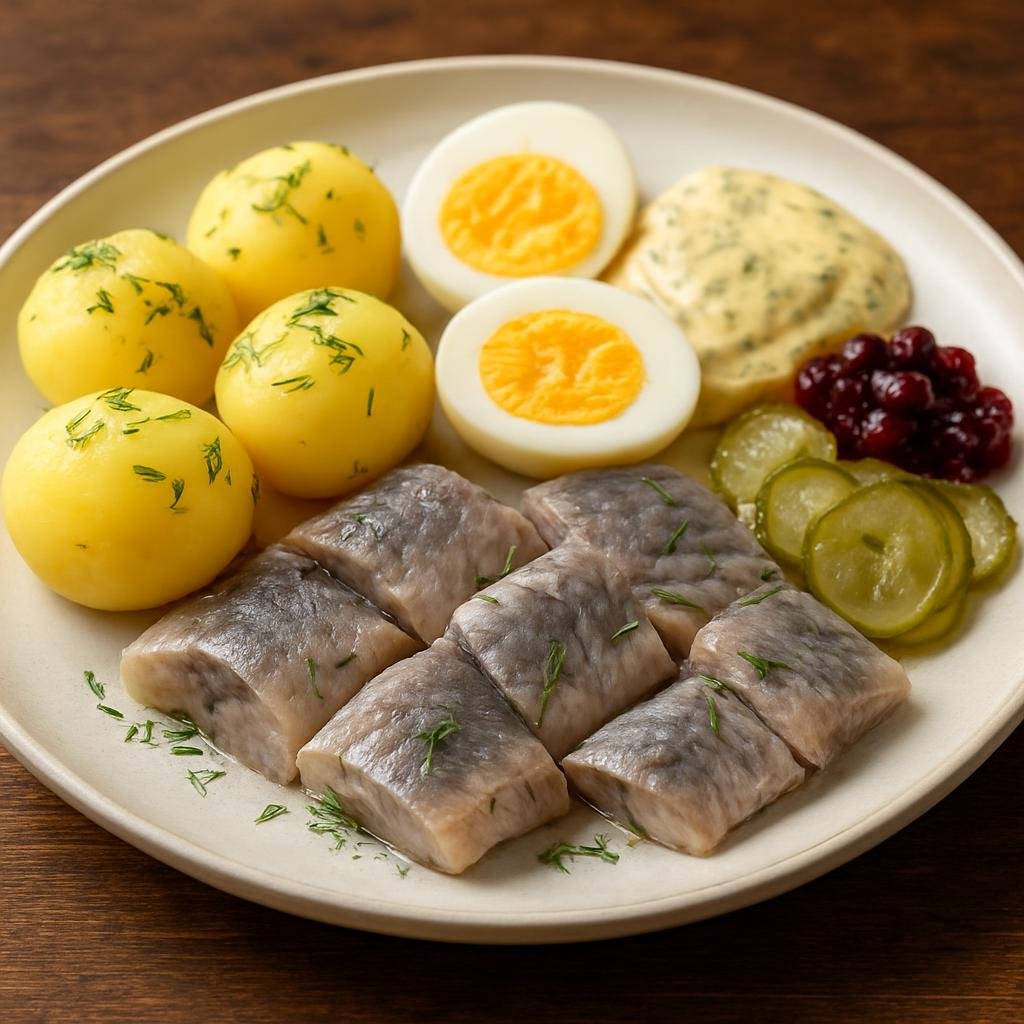
Serving Size: 4
Approximate Time
Prep
25 min
Cook
15 min
Total
40 min
Ingredients
- 10 oz (280 g) pickled herring fillets (matjes or mustard-pickled), drained
- 2 lb (900 g) small new potatoes (or fingerlings), scrubbed
- 4 large eggs, hard-boiled, peeled (approx. 200 g)
- 1 cup (240 g) sour cream
- ½ cup (120 g) crème fraîche
- 2 tbsp (30 g) Dijon mustard
- 3 tbsp (45 ml) finely chopped fresh dill, divided
- 1 tbsp (15 g) sugar
- 1 tbsp (15 ml) white wine vinegar
- 3 tbsp (45 ml) neutral oil (canola or rapeseed)
- 1 small red onion, very thinly sliced (about 70 g)
- 2 tbsp (30 g) chopped chives
- Salt and freshly ground black pepper to taste
- 8 pieces crispbread (knäckebröd) or rye crispbread, for serving
- Lemon wedges, for serving
Instructions
1. Place new potatoes in a large pot, cover with cold salted water, bring to a boil and cook until tender, about 12–15 minutes depending on size. Drain and keep warm or cool slightly for cold-style service.
2. Meanwhile make the mustard-dill sauce: whisk together Dijon mustard, sugar, white wine vinegar, and oil until smooth. Stir in 2 tbsp (30 ml) of the chopped dill and season with salt and pepper. Set aside.
3. Combine sour cream and crème fraîche in a small bowl with remaining 1 tbsp (15 ml) chopped dill and chopped chives; season lightly with salt and pepper to make a creamy garnish.
4. Peel and halve the hard-boiled eggs. Thinly slice red onion and, if the herring is in large fillets, cut into bite-size pieces.
5. Arrange the silltallrik on a large platter or individual plates: place warm or cold potatoes, pickled herring, halved eggs, a spoonful of the mustard-dill sauce, and a dollop of sour cream mixture. Scatter sliced red onion and additional dill over the top.
6. Serve with crispbread and lemon wedges on the side so diners can assemble bites: potato, herring, a little sauce and sour cream, and a dusting of chives.
Nutrition Information
To get nutritional information, press the Get Nutrition Info button below.